Current Location: Blog >
South Korea server
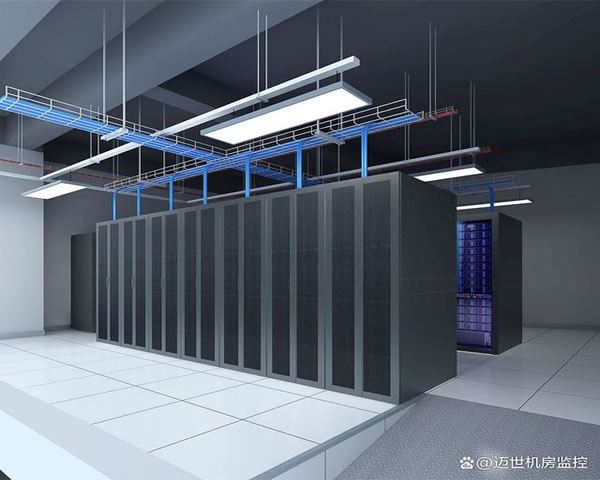
1.
overview: network characteristics and common risks of kt station group
• kt has multiple backbone nodes in south korea, and the delay distribution is usually between 10-60ms;• a site group usually consists of multiple vps/dedicated servers, and public ip pools and port restrictions require attention;
• common risks: bandwidth burst, tcp half-open connection, dns resolution anomaly, cdn back-to-origin problem;
• monitoring recommendations: use snmp/netflow and delay monitoring, and the traffic sampling period is recommended to be 1 minute;
• alarm threshold example: traffic exceeding 500mbps or pps>500k triggers an advanced alarm.
2.
fault location process and tool list
• step 1: confirm the scope of impact (single machine/subnet/full site group), and group and investigate by ip segment;• step 2: link detection, use mtr/traceroute to confirm the hop count and packet loss rate;
• step 3: host-side monitoring, check top/iostat/netstat/ss output;
• step 4: packet capture analysis, tcpdump -i eth0 -c 20000 host xyzw;
• step 5: upstream verification, check cdn back-to-origin, dns resolution and kt peer alarm records.
3.
host/vps configuration and performance bottleneck examples
• recommended base configuration (example): 4 vcpu / 8gb ram / 100gb nvme / 1gbps port;• performance traps: single-core saturation, high io wait, and large proportion of softirqs;
• network parameter tuning: net.core.somaxconn=1024, net.ipv4.tcp_max_syn_backlog=2048;
• nginx recommendation: worker_processes=auto, worker_connections=4096;
• resource monitoring: when 95% of the time cpu load>number of cores or iowait>30%, expansion or optimization is required.
| host | cpu | memory | port bandwidth | typical traffic |
|---|---|---|---|---|
| vps-kr-01 | 4 vcpus | 8gb | 1gbps | average 120mbps, peak 600mbps |
| vps-kr-02 | 8 vcpus | 16 gb | 2gbps | average 300mbps, peak 1.2gbps |
4.
domain name/cdn/dns faqs and solutions
• dns resolution delays or errors: check ttls and upstream resolver connectivity;• domain name resolution is inconsistent: compare the results returned by authoritative dns and recursive dns;
• cdn return to origin timeout: check the return to origin ip whitelist and firewall policy;
• cache penetration: set appropriate caching rules for dynamic interfaces or use tokens to prevent brushing;
• recommendation: set up secondary back-to-origin and load balancing. the peak cdn bandwidth needs to be estimated to be 130% redundant.
5.
ddos defense strategy and recovery process
• identification characteristics: pps > 200k or traffic sudden increase > 300% in a short period of time are attack indicators;• local protection: use conntrack/iptables speed limit and syn cookies enabled;
• cloud/upstream: contact kt or a third party for cleaning (example cleaning capacity: 10gbps/100mpps);
• drill recommendations: regularly drill back-to-source switching, black hole routing and traffic cleaning switching;
• recovery steps: first cut off abnormal traffic (acl/black hole), then gradually release it and observe the manslaughter rate.
6.
examples of practical commands and log troubleshooting
• check the number of connections: ss -s and ss -tanp | grep syn | wc -l;• packet capture example: tcpdump -nn -s0 -c 10000 -w dump.pcap host 1.2.3.4;
• iptables speed limit example: iptables -a input -p tcp --syn -m limit --limit 50/s --limit-burst 100 -j accept;
• log inspection: /var/log/nginx/access.log counts request peaks by time window;
• performance data reference: in a fault, it was observed that pps increased from 30k to 680k, resulting in softirq accounting for 80%.
7.
real case: a certain kt station group was attacked by syn flood and the recovery process
• background: at 03:10 on 2025-03-12, the station group traffic suddenly increased from an average of 200mbps to 1.6gbps;• impact: connection queue overflow occurred on multiple vpss, and nginx 502/504 errors surged;
• disposal: immediately enable iptables speed limiting and request kt on the cdn side to assist in starting cleaning (10gbps cleaning node);
• recovery: return-to-origin traffic drops to normal within 15 minutes, manslaughter <0.5%, and business gradually recovers;
• lesson: it is recommended to retain at least 1:3 cleaning bandwidth budget and automated switching strategy all year round.
- Latest articles
- How Do Enterprises Assess The Time It Takes For Tencent Cloud Singapore Servers To Recover After A Failure?
- Guidance On The Application Of Korean IP Native In SEO And Refined Promotion Operations
- Cross-server StarCraft Battle, Creating A Room, Choosing A Korean Server, Multi-country Player Experience Analysis
- Consider Multi-region Backups: Which Cloud Server In Taiwan Is Recommended With Excellent Disaster Recovery Capabilities?
- From Latency To Throughput, A Comprehensive Assessment Of The Large Bandwidth Advantages Of Hong Kong's Native IPs
- Comparing The Cost-performance Ratio And Technical Specifications Of Taiwanese VPS Cloud Hosts With High-protection Cloud Space
- Before Choosing A Hong Kong High-defense Exemption Server, You Need To Pay Attention To Security And Contract Terms
- Experts Recommend Paying Attention To ISP And Routing Issues When Assessing The Speed Of Vietnamese VPS
- Cost Control Tips For Korean CN2 Site Clusters: Bandwidth Billing And Resource Allocation Recommendations
- Common Causes Of Tencent Cloud Singapore Server Failures And Best Practices For Prevention
- Popular tags
VPS Recommendations
Redundancy
Player Choice
Low-price Vps
Dts
Virtual Private Server
Game Version
Business Recovery Time
Trial
Game Guide
Budget And Performance
Ss
Server Layout
Purchasing Agent
Coupon Identification
Cn2 Solutions
Tencent Cloud
Network Problem
Cmi Control Panel
Savings Tips
Vps Saves Money And Worry
Cdn
CN2VPS
Vps Configuration
Prometheus
Low Latency
Unlocking
Cost Analysis
Small To Medium-sized Sites
Related Articles
-
Korean Native Family Ip Proxy Security Settings And Parental Monitoring Suggestions In Family Scenarios
focusing on the security settings and parental monitoring suggestions for using korean native home ip proxies in family scenarios, we answer five common questions, including configuration, monitoring strategies, risk protection and recommended equipment. -
Guide To Obtaining And Using The Chinese Server Address Of LG Korea
How to obtain and use the Chinese server address of LG in South Korea, helping users to better access and use LG services. -
Analyze The Characteristics And Application Scenarios Of Korean Group Station Ips
this article analyzes the characteristics and application scenarios of korean group station ip, and discusses its application in servers and technology.